How Many Balloons Do You Need? A Count-by-Space Method
Stop guessing balloon quantities. Measure the run, convert with per-meter rates for 10" and 12" latex, then add 10% spare. Worked examples for garlands, columns, walls and tables.
Ask a room of decorators how many balloons a job needs and you will hear different numbers — not because anyone knows a secret formula, but because the careful ones measured and the rest guessed.
There is no magic number per party or per room — there is a method, and it works the same for a garland, a column or a full wall: measure the space, convert with a rate, then add a spare margin.
Short answer: Measure the length your balloons will cover — the run. Multiply by the rate for your size: 12–14 balloons per meter for 12", or 15–18 per meter for 10". Then add a planned spare margin of about 10% for pops and mistakes.
1. The one unit everything is built from: the cluster
Almost all balloon decor is built from clusters — four balloons of the same size, tied as one unit. Packed back to back along a line, one cluster covers roughly one balloon-width of length. That produces the rates:
| Balloon size | Per meter | Per foot |
|---|---|---|
| 10" | 15–18 | 4.5–5.5 |
| 12" | 12–14 | 3.5–4.5 |
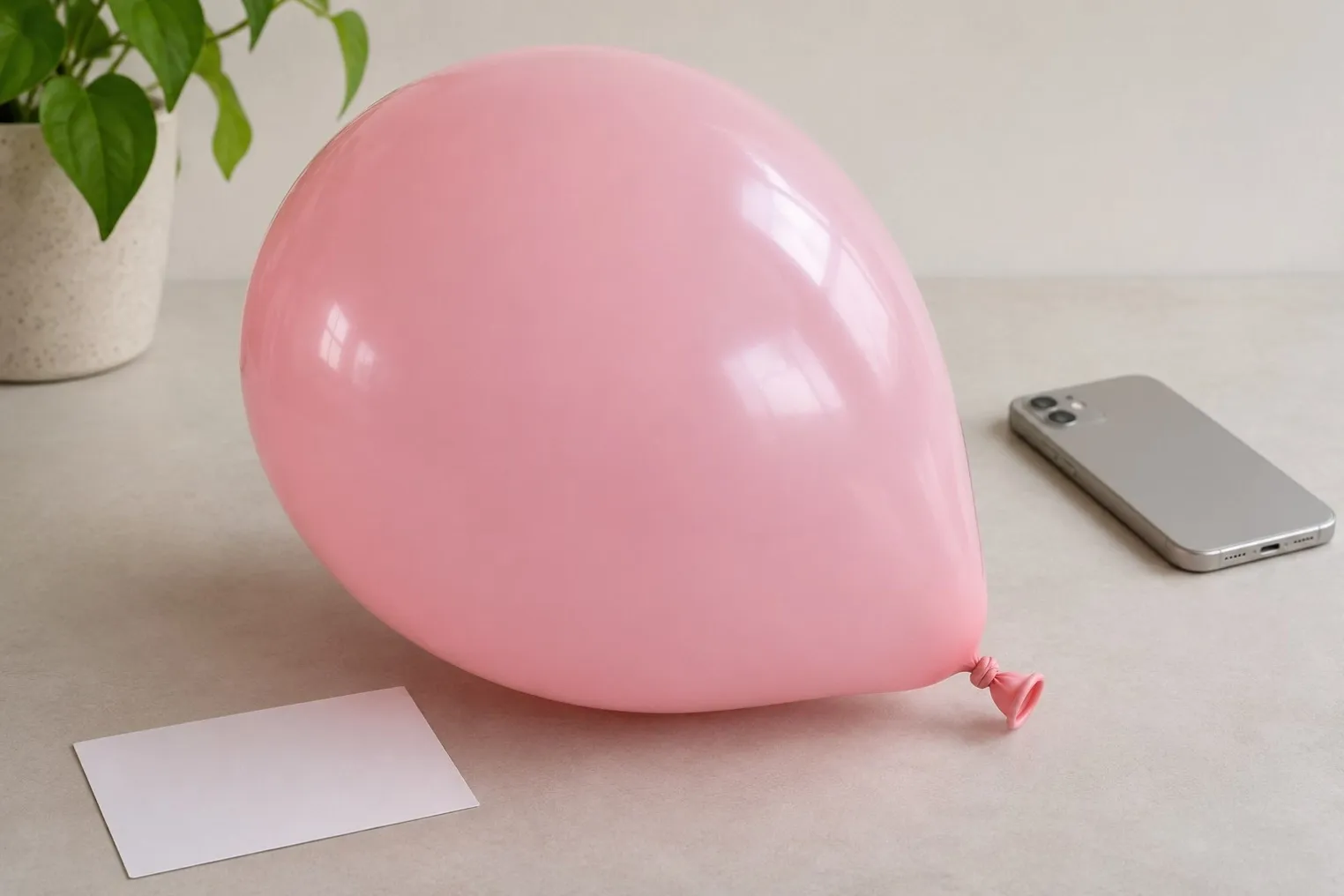
The conditions matter: clusters packed back to back at classic density, each balloon inflated to just under its rated size — a 12" balloon to about 11–11.5". Inflate smaller and clusters pack tighter, toward the top of the range.
Check the rate against your own build before you scale it. Build one test meter the way you plan to build the piece, and count what it actually takes.
If your test meter uses 16 balloons in 12" instead of 13, plan with 16 — your inflation size and your packing density set the real rate. The table gets you close; the test meter makes the count yours.
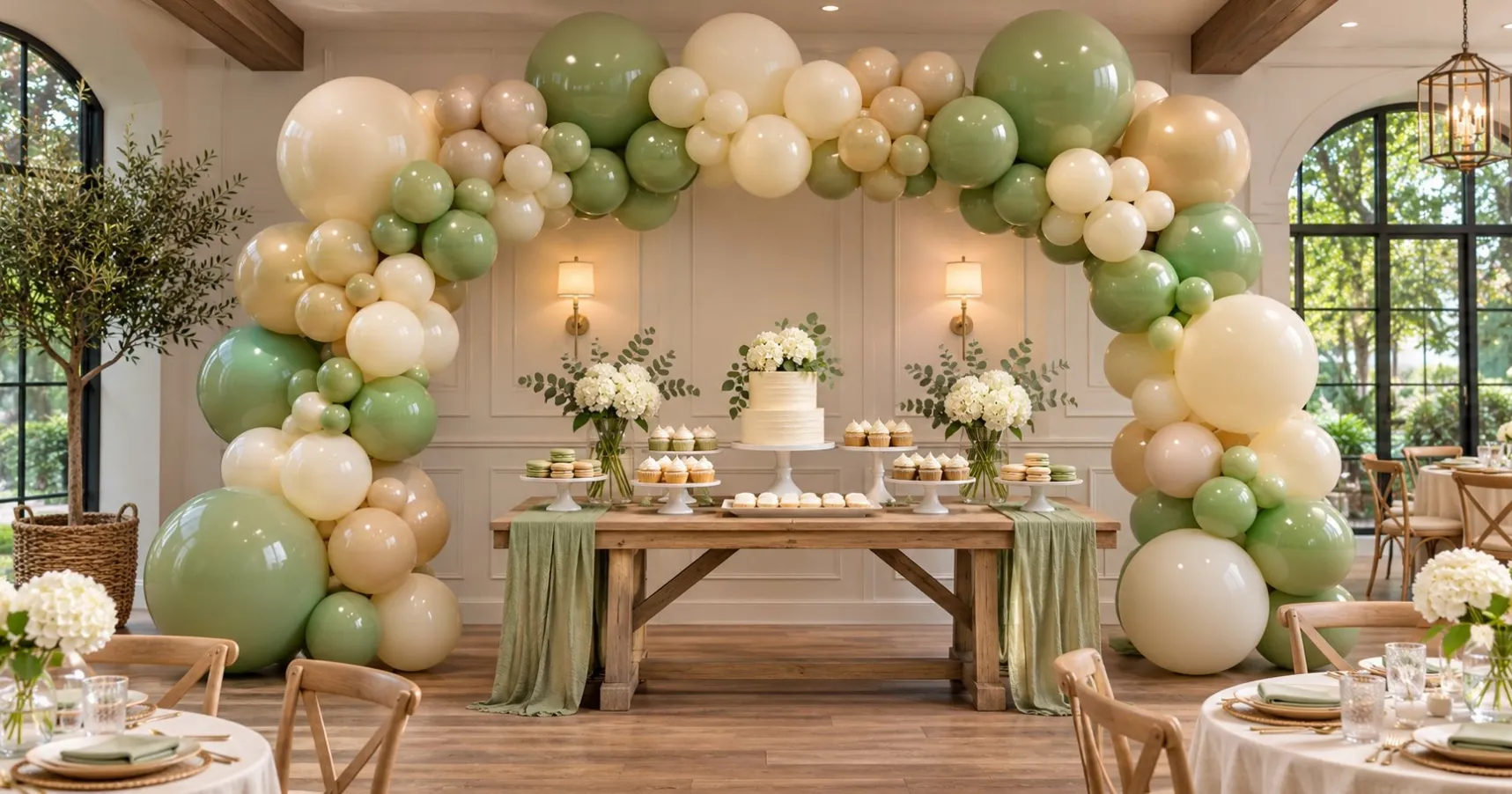
An organic garland is packed looser or denser by eye, so treat the rate as a starting estimate. How an organic piece should look — sizes, shapes, styling — is covered in our guide to organic balloon decor; this article only counts.
2. Measure the run, not the room
The most common counting mistake is measuring the wrong line. Balloons follow a path, and the path is what you measure.
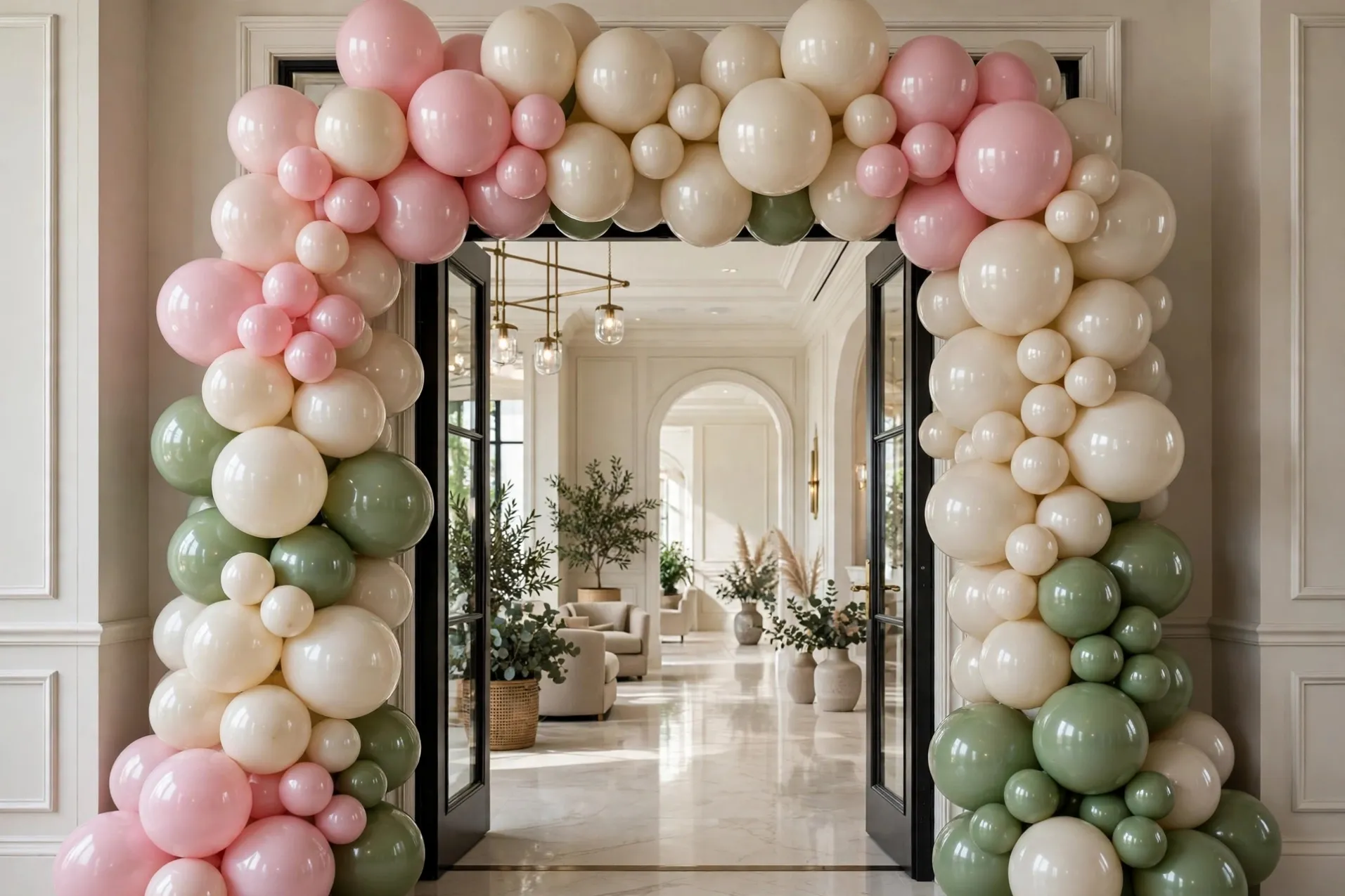
- For an arch or doorway garland, measure up one side, over the top and down the other side — along the curve, not across the opening.
- For a stair rail, table edge or ceiling swag, follow the line the garland will take, dips included.
- Round up to the nearest half meter. A partial meter still takes whole clusters, so rounding down is how jobs come up short.
A tape measure and two minutes save the mid-build scramble later. Our balloon arch guide uses the same rates and covers the building steps.
3. Convert length to balloons: garlands and arches
This step is plain multiplication. A 5 m garland or arch takes about 60–70 balloons in 12", or 75–90 in 10". A 10-foot run takes about 36–42 in 12", or 45–55 in 10".
Mixed sizes ride on top of the main count rather than changing it:
- 5" balloons are filler, pushed into gaps and color transitions. Plan 20–40 pieces for a medium garland.
- 18" balloons are statement pieces at the base, the top corner and the widest points. 3–7 pieces is typical.
Split the total by color before you order, not after. Even patterns take roughly equal quantities per color; a three-color organic piece starts around 60/30/10 — main, secondary, accent.
4. Columns and walls: an area is just stacked runs
A column is a run standing upright, so its height is the measurement — rounded up the same way.
A column built to 1.8 m is planned as a 2 m run: at 12–14 per meter, that is 24–28 balloons in 12" (30–36 in 10"). A pair of entrance columns lands around 48–56 balloons in 12" before spares.
A wall is several horizontal runs stacked one balloon-width apart.
Take a backdrop wall 3 m wide and 2.4 m high: rows sit about one inflated balloon apart — roughly 0.3 m for 12" balloons — so the height holds about 8 rows, and the total run is 8 × 3 m = 24 m.
At 12–14 per meter, that is 288–336 balloons in 12".
Treat both as planning ranges, not promises. Packing a wall tighter for a photo backdrop pushes the count up; spacing rows out pulls it down.
The row spacing is the roughest number here — if the wall matters, build a test section first and plan from its count rather than the table, the same check as the test meter above.
5. Table pieces: count per piece, then multiply
Small arrangements are counted per piece, then multiplied by the tables. A table cluster built from the same unit — two clusters of four, plus two or three 5" fillers — runs about 10–11 balloons per table. Ten tables is roughly 100–110 balloons.
The per-piece habit matters more than the exact number. Count one finished piece and multiply. Counting a whole room in your head is how a 10-table job gets ordered as 60 balloons.
6. Add the spare margin, then round up to bags
Whatever total the method gives you, add a planned spare margin of about 10% for pops, slow leaks and the cluster that lands on a sharp edge. Add it per color and per size — a spare balloon in the wrong color does not rescue a pattern.
Then round the main count up to whole clusters of four — the piece's body is built in fours. Fillers, statement balloons and spares are counted separately, on top.
Then round each color up to a whole bag. Bag counts differ by size and series, so confirm the bag size when you order — the rounding is to full bags, whatever count that item ships in.
If you want a second pair of eyes, send us your measured runs and your color list and we will check the count with you before you order. We keep our minimum order low, and every inquiry gets a proper quote — asking costs nothing.
FAQ
How many balloons do I need for a 10-foot garland?
About 36–42 in 12", or 45–55 in 10", measured along the path the garland follows. Add a planned margin of roughly 10% for breakage.
Why did my garland come out shorter than planned?
Usually one of two reasons: the opening was measured instead of the curve over it, or the balloons were inflated smaller than planned, packing more balloons into every meter.
Does an organic garland need a different count?
The base count is similar. What changes is density, which you judge by eye, plus the fillers and accent balloons. Count the main run the same way, then add 5" fillers and 18" pieces separately.
How many spares should I actually order?
A planned margin of about 10% beyond your counted total, split across every color and size in the design. Heavy handling, outdoor heat or a first-time builder argue for a wider margin, not a tighter one.